



Description
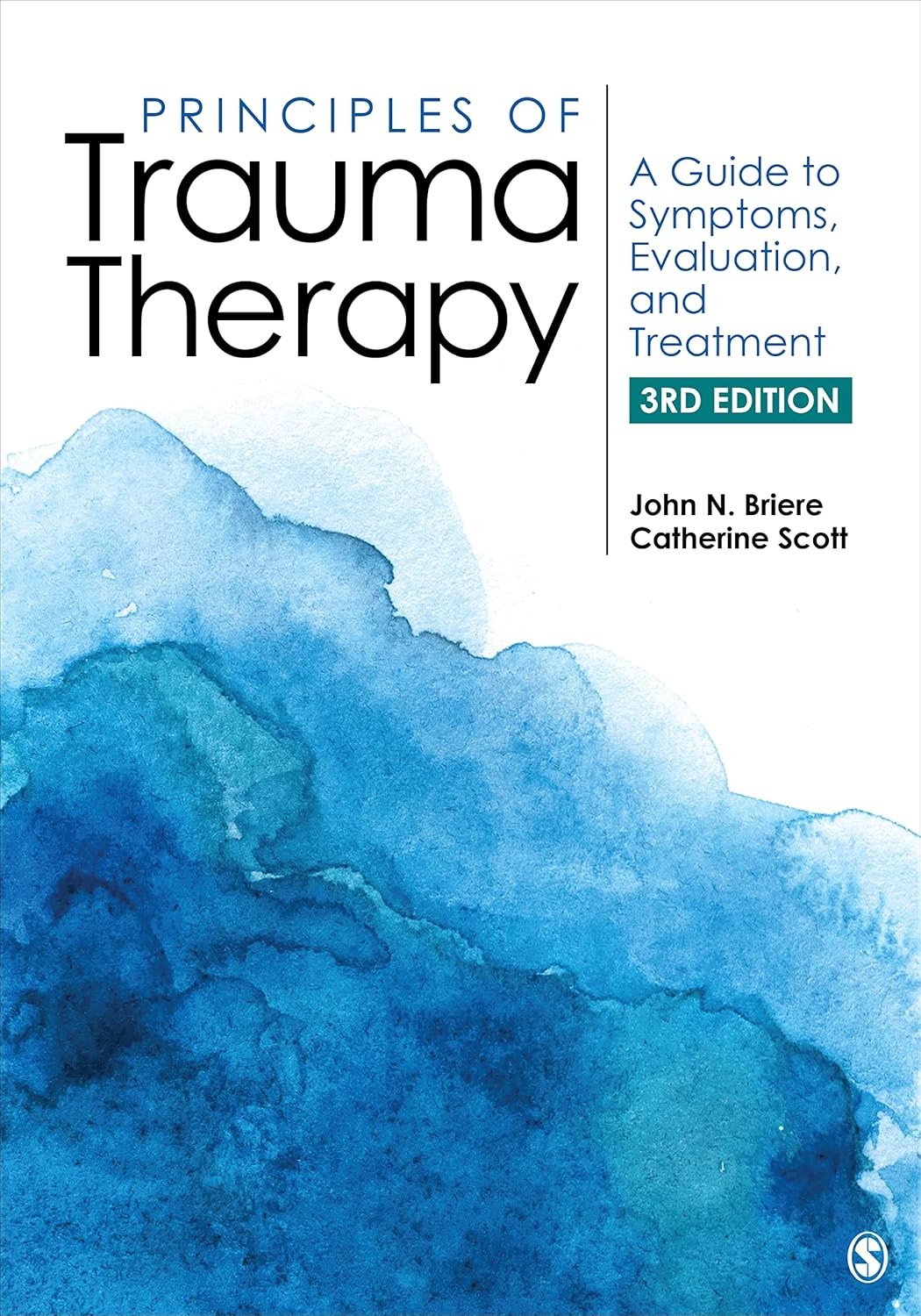
Principles of Trauma Therapy: A Guide to Symptoms, Evaluation, and Treatment, 3rd edition
John N. Briere and Catherine Scott wrote Principles of Trauma Therapy for clinicians treating both acute and chronic post-traumatic conditions. The third edition combines mindfulness practice, cognitive interventions and relational emotional processing rather than relying on one therapeutic model, and covers emergency psychiatric admissions, long-term childhood abuse recovery and general community health work.
The book is written for front-line therapists, medical social workers and graduate students who need protocols that work across a range of trauma presentations rather than a single client type.
Evaluation and distress reduction
The book sets out evaluation methods built around empirical screeners, including the Trauma Exposure Review (TER), to map client symptoms. Alongside these are distress reduction techniques for de-escalating chronic emotional dysregulation, acute intrusions and survival triggers.
Identity, biology and pharmacology
A section on identity and relation rebuilding addresses the fractured sense of self and relational difficulties common after survival trauma. A separate section on psychobiology and pharmacology covers the HPA axis, the endocannabinoid system and current medication approaches.
What is new in the third edition
- A new section on teletherapy: remote treatment principles, platform safety and professional code standards.
- Updated material on cultural and structural awareness, covering systemic discrimination, minoritized stressors and non-Western trauma expressions.
- Practical tool appendices, including the Mindfulness-based Breath Training (MBBT) Protocol and Urge/Emotion Surfing exercises for direct use with clients.
Book details
- Title: Principles of Trauma Therapy: A Guide to Symptoms, Evaluation, and Treatment
- Authors: John N. Briere, Catherine Scott
- Edition: 3rd
- Publisher: SAGE Publications
- ISBN-13: 9781544333564
- Format: Paperback
Questions buyers ask
Who is Principles of Trauma Therapy written for?
Front-line therapists, medical social workers and graduate students who treat both acute and chronic post-traumatic conditions.
Does it cover teletherapy?
Yes. The third edition adds a section on remote treatment principles, platform safety and professional code standards.
Does it include assessment tools?
Yes. It builds evaluation around empirical screeners such as the Trauma Exposure Review (TER).
Is it built around one therapy model?
No. It combines mindfulness practice, cognitive interventions and relational emotional processing rather than a single modality.
What format does it ship in?
Paperback, ISBN 9781544333564.








Reviews
There are no reviews yet.