



Description
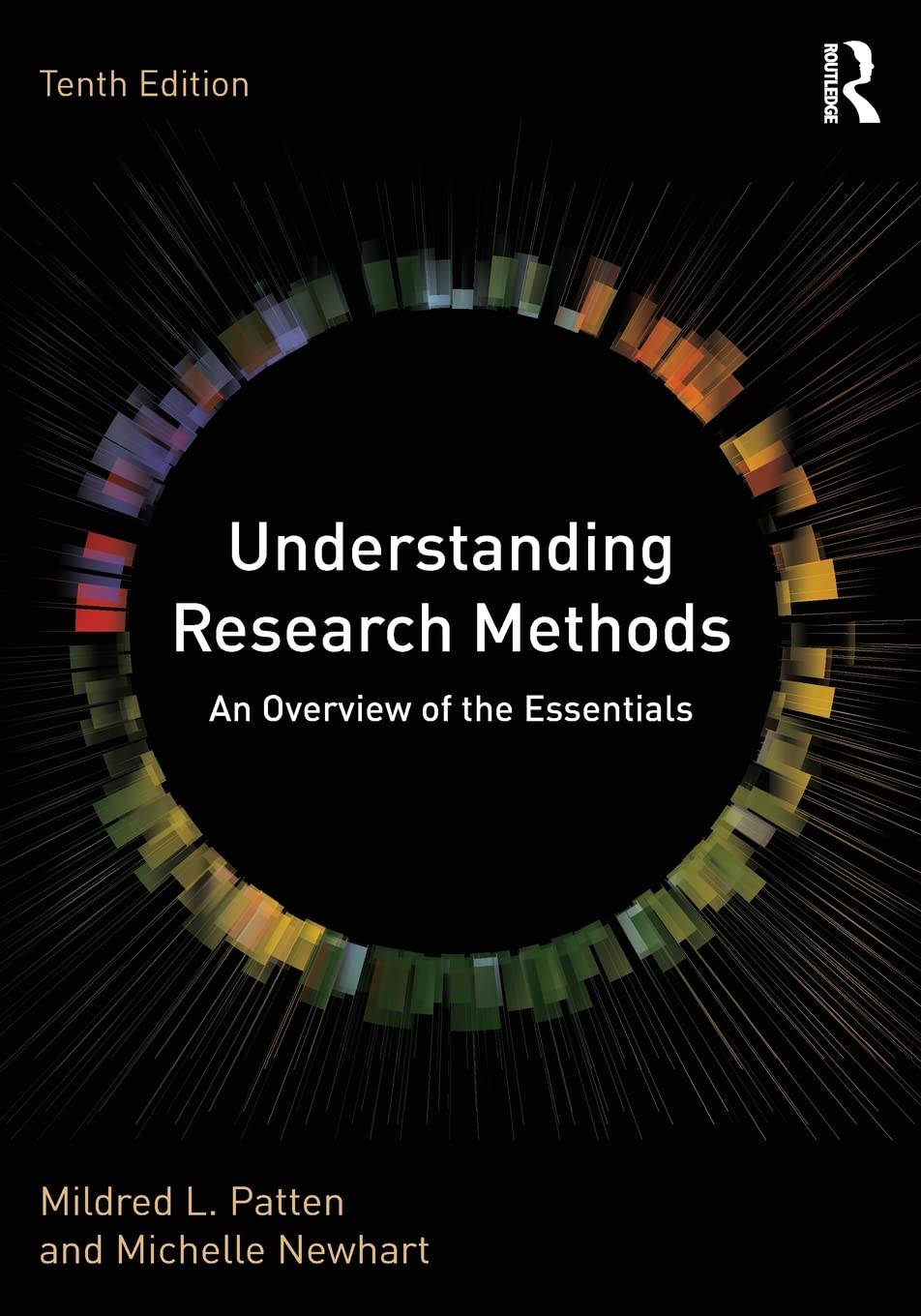
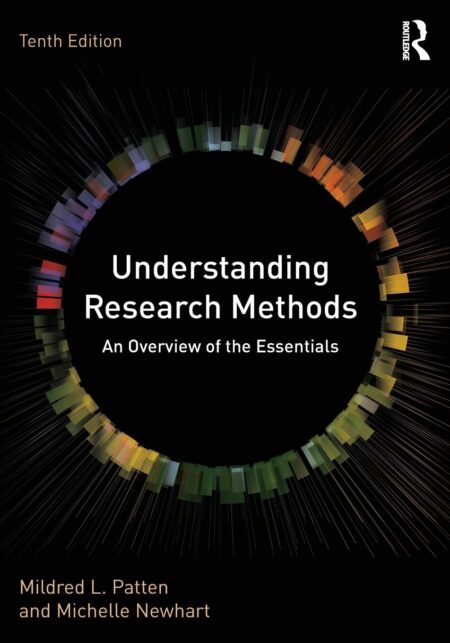
Understanding Research Methods: An Overview of the Essentials, 10th edition
Understanding Research Methods has been in print since 1997, and the tenth edition keeps the format that made it work: short, self-contained topic sections instead of long chapters. Mildred L. Patten and Michelle Newhart handle one idea at a time, so a section on sampling bias or operational definitions can be read on its own, in whatever order a course runs.
The book is written for students who need to read and interpret research rather than run the calculations themselves. It turns up in sociology, psychology, criminal justice, education and business courses.
Statistics without the arithmetic
t-tests, ANOVA and Chi-square are covered by what their results mean, not by how to work them out by hand. That is enough to get through a journal article without a statistics background.
Qualitative and quantitative side by side
Grounded theory and case study work sit next to true experimental and quasi-experimental designs, so the two traditions are easy to compare.
Research ethics
These sections trace the historical milestones behind the current rules, explain what Institutional Review Boards do, and cover privacy obligations in modern data gathering. The tenth edition expands this material.
What is new in the tenth edition
- New Design Decisions modules showing how working researchers make design choices early in a project.
- Expanded coverage of contemporary ethical obligations in data gathering.
- Rewritten end-of-section exercises with step-by-step prompts for building your own research proposal.
Book details
- Title: Understanding Research Methods: An Overview of the Essentials
- Authors: Mildred L. Patten, Michelle Newhart
- Edition: 10th
- Publisher: Routledge
- ISBN-13: 9780415790529
- Format: Paperback
Questions buyers ask
Do I need to know statistics to use this book?
No. The statistical sections explain what each test shows rather than how to calculate it, so no math background is assumed.
Can it be read out of order?
Yes. Every topic section stands alone, which is why instructors often assign them in whatever sequence suits their syllabus.
How does the 10th edition differ from the 9th?
It adds the Design Decisions modules, expands the research ethics material, and rewrites the end-of-section exercises around building a research proposal.
Which courses use it?
Undergraduate and graduate methods courses in sociology, psychology, criminal justice, education and business.
Is this the paperback?
Yes. ISBN 9780415790529 is the Routledge paperback edition.




Reviews
There are no reviews yet.