
Description
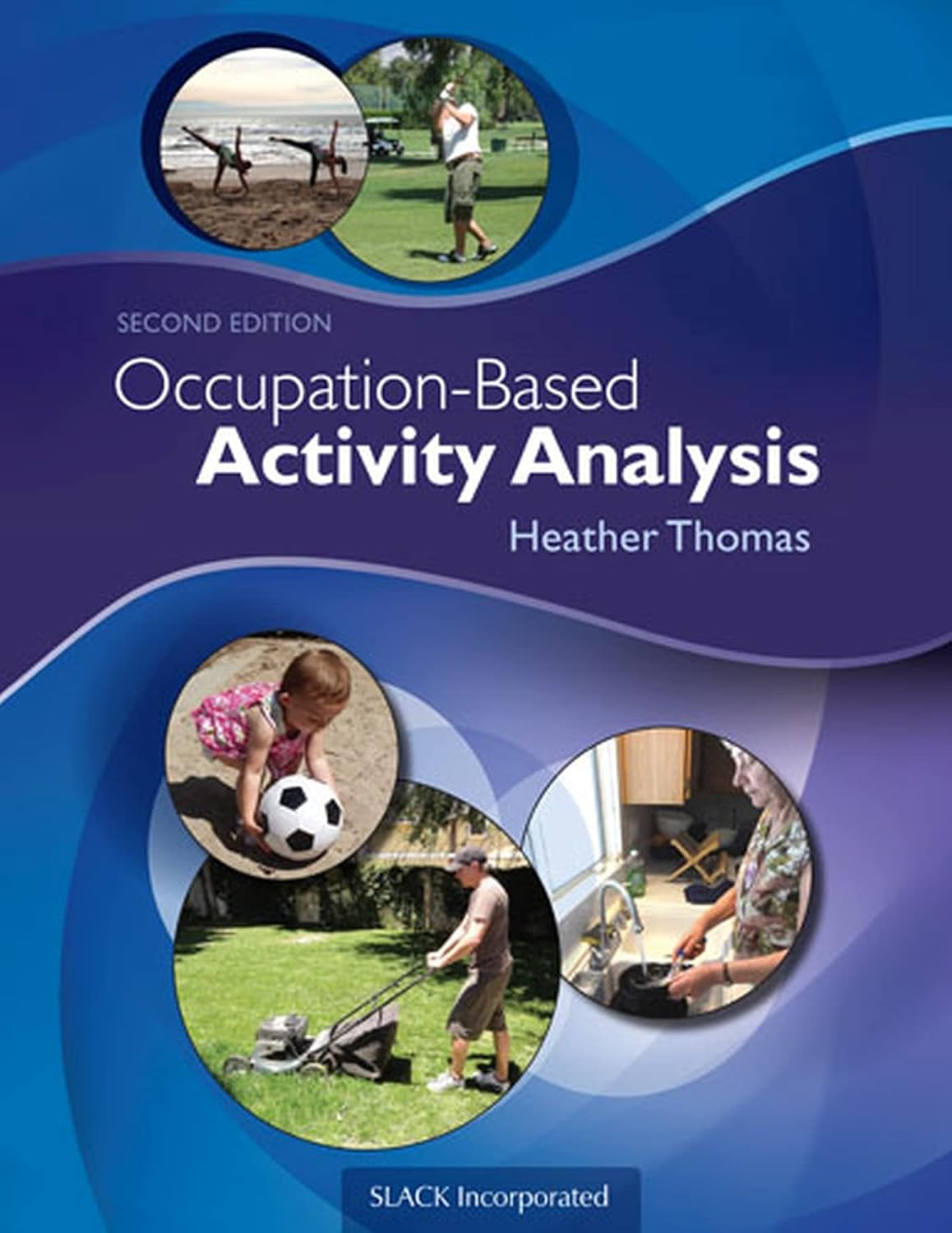
Occupation-Based Activity Analysis, Second Edition
Occupational therapists use occupation as both the goal of treatment and the means of it. That double role makes activity analysis a skill nobody gets to skip: before an activity can be graded, adapted or used therapeutically, the practitioner has to know exactly what it demands. Occupation-Based Activity Analysis, Second Edition by Heather Thomas, PhD, OTR/L, teaches that process from the ground up.
It then goes a step further, showing how the same activity becomes a different clinical proposition depending on who is doing it, where, and what it means to them. The book is a standard first-year text in occupational therapy and OTA programmes.
A chapter for each component of the analysis
Every chapter takes one component and its matching section of the Occupational Therapy Practice Framework, Third Edition, so the book works as a course sequence or as a reference during fieldwork.
- Identifying the occupation: separating an activity from an occupation, and pinning down what the task actually is.
- Sequence and timing: breaking a task into ordered steps and realistic durations.
- Objects and their properties: the tools, materials and equipment a task requires, and the demands each places on the user.
- Space and social demands: the physical environment and the social expectations built into the activity.
- Body functions and body structures: the physiological and cognitive capacities the task draws on.
- Performance skills: motor, process and social interaction skills, in Framework terminology.
Where occupation-based analysis parts company with activity analysis
A standard activity analysis asks what full participation requires in general. An occupation-based activity analysis asks what it requires of this client, in this context, given the meaning they attach to the occupation. Worked examples and end-of-chapter activities take students through both layers, which is the reasoning that feeds goal setting, intervention planning and documentation.
What is new in this edition
- Chapters updated to the Practice Framework, Third Edition, with revised terminology for occupations, performance skills and body functions.
- A new chapter on the addition to the Framework Activity Demands section.
- More weight on occupation-based analysis rather than activity analysis alone.
- Additional practice activities at the end of each chapter.
- Updated appendices and analysis forms for classroom and fieldwork use.
- Redrawn, higher-resolution images and refreshed instructor materials.
Book details
- Title: Occupation-Based Activity Analysis
- Author: Heather Thomas, PhD, OTR/L
- Edition: Second Edition
- Publisher: SLACK Incorporated / Routledge (Taylor & Francis)
- ISBN-13: 9781617119675
- Format: Paperback, 256 pages
Questions buyers ask
Is this book for OT students or OTA students?
Both. It is written for the first activity analysis course in either programme, and fieldwork educators and practising clinicians use it too.
Which Practice Framework does it follow?
The Occupational Therapy Practice Framework, Third Edition. This edition was realigned to that version throughout.
What is the difference between activity analysis and occupation-based activity analysis?
Activity analysis asks what an activity demands of anyone. Occupation-based activity analysis asks what it demands of a particular client in their own context. The book covers both.
Does it include analysis forms I can use?
Yes. The appendices and analysis forms were updated for this edition, for classroom and fieldwork use.
How does the second edition differ from the first?
It follows the third edition of the Practice Framework, adds a chapter on the Activity Demands addition, adds practice activities to each chapter, and updates the forms and images.








Reviews
There are no reviews yet.