



Description
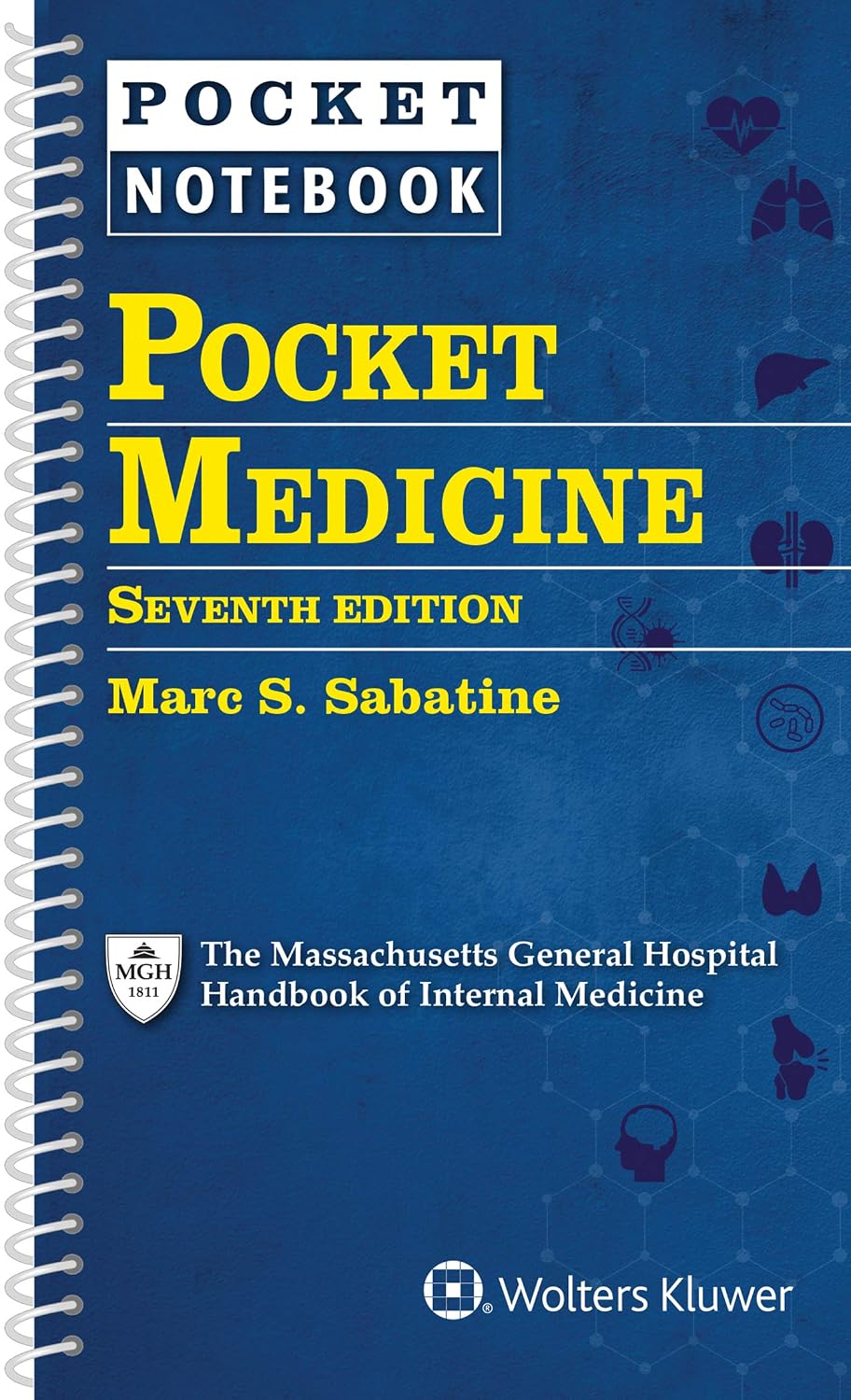
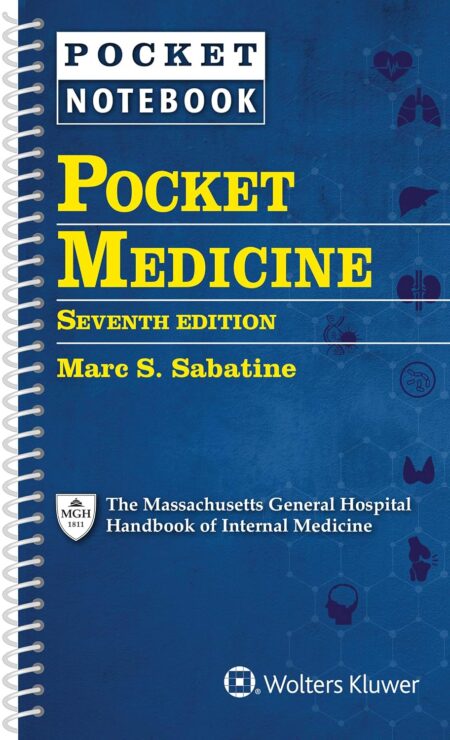
Pocket Medicine: The Massachusetts General Hospital Handbook of Internal Medicine, 7th edition
There are long internal medicine texts and there are pocket references, and they serve completely different moments. Pocket Medicine is unambiguously the second: dense, schematic, organised by problem, and sized to live in a coat pocket for a whole rotation.
Its authority comes from who writes it, residents and attending physicians at Massachusetts General Hospital, and its usefulness from how ruthlessly it strips out everything you would not consult at the bedside.
What makes it work
- Organised by clinical problem, so it maps onto how questions actually arise on rounds.
- Bulleted, schematic format: differential diagnoses, workups and management in scannable form rather than prose.
- Evidence linked: key trials and guidelines are cited so recommendations can be traced.
- Spiral binding that opens flat and survives a rotation.
- Covers the major systems: cardiology, pulmonary, gastroenterology, nephrology, haematology-oncology, infectious disease, endocrinology, rheumatology and neurology.
Who this book is for
- Internal medicine residents and interns.
- Medical students on clinical rotations and preparing for shelf examinations.
- Physician assistants and nurse practitioners in inpatient medicine.
- Hospitalists wanting a fast bedside cross check.
Book details
- Title: Pocket Medicine: The Massachusetts General Hospital Handbook of Internal Medicine
- Editor: Marc S. Sabatine, MD
- Edition: 7th
- Publisher: LWW (Wolters Kluwer)
- ISBN-13: 9781975142377
- Format: Spiral bound, 272 pages
Questions buyers ask
Who uses Pocket Medicine?
Internal medicine residents and interns, medical students on clinical rotations preparing for shelf exams, physician assistants and nurse practitioners in inpatient medicine, and hospitalists wanting a fast bedside cross check.
How is this different from a full internal medicine textbook?
It is organised by clinical problem in a bulleted, schematic format rather than prose, stripped down to what you would actually consult at the bedside.
Are the recommendations backed by evidence?
Yes. Key trials and guidelines are cited so recommendations can be traced.
What systems does it cover?
Cardiology, pulmonary, gastroenterology, nephrology, haematology-oncology, infectious disease, endocrinology, rheumatology and neurology.
Is this the spiral bound edition?
Yes. ISBN 9781975142377 is the LWW (Wolters Kluwer) spiral bound edition, 272 pages, edited by Marc S. Sabatine.





Reviews
There are no reviews yet.