



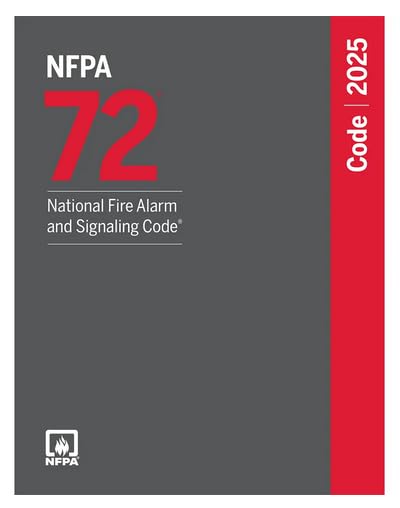
Description
NFPA 72, National Fire Alarm and Signaling Code, 2025 edition
NFPA 72 is the standard for fire alarm systems, emergency communications and mass notification. Engineers, installers and facilities managers use it to design, install and maintain life safety systems.
The NFPA 72 2025 edition makes a major change by moving cybersecurity out of an informational annex and into Chapter 11, where it becomes a mandatory requirement rather than a recommendation.
Mandatory cybersecurity and new detection technologies
Chapter 11 now sets mandatory cybersecurity requirements covering configuration, access control and security protocols for networked systems. The code also adds first-time requirements for acoustic leak detectors, used for pressurized gas leaks, and thermal image fire detectors.
Restricted Audible Mode and signal transmission
A new Restricted Audible Mode Operation (RAMO) gives a quieter, less startling notification option for occupants in sensitive settings such as those with neurodiversity or early education environments, using alternative signaling methods instead of standard audible alarms. New rules also cover Auxiliary Service Providers, the third-party and cloud-based intermediaries that handle signal transmission to supervising stations, and smoke detector spacing on ceilings over 40 feet now requires performance-based design.
What is new in this edition
- Cybersecurity requirements moved from an informational annex to mandatory Chapter 11
- First-time requirements for acoustic leak detectors and thermal image fire detectors
- New Restricted Audible Mode Operation (RAMO) for sensitive environments
- New regulations for Auxiliary Service Providers handling cloud-based signal transmission
- Revised smoke detector spacing rules for ceilings over 40 feet, requiring performance-based design
Book details
- Title: NFPA 72, National Fire Alarm and Signaling Code
- Edition: 2025
- Publisher: NFPA
- ISBN-13: 9781455931521
Questions buyers ask
Who uses NFPA 72?
Engineers, installers and facilities managers use it to design, install and maintain fire alarm, emergency communication and mass notification systems.
What changed in the 2025 edition?
The largest change is mandatory cybersecurity requirements in Chapter 11, alongside new detection technologies, the new RAMO notification mode, Auxiliary Service Provider rules and revised high-ceiling smoke detector spacing.
Is cybersecurity now a mandatory requirement?
Yes. Cybersecurity guidance moved out of an informational annex and into Chapter 11, where it is now mandatory for networked systems.
What is Restricted Audible Mode Operation?
RAMO is a new notification mode that uses alternative signaling instead of a standard audible alarm, intended for occupants in sensitive settings such as those with neurodiversity or early education environments.
Does this edition cover high-ceiling spaces?
Yes, smoke detector spacing for ceilings over 40 feet now requires performance-based design rather than the older prescriptive spacing.




Reviews
There are no reviews yet.