



Description
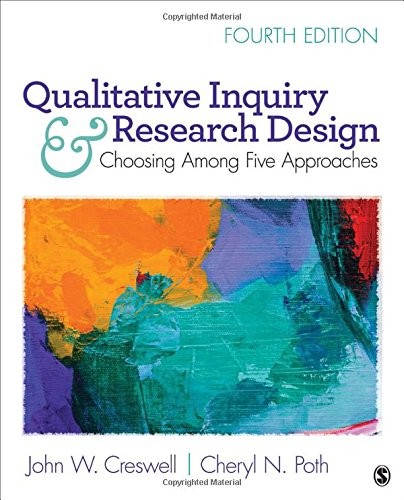
Qualitative Inquiry and Research Design: Choosing Among Five Approaches, 4th edition
Qualitative Inquiry and Research Design is John W. Creswell and Cheryl N. Poth’s textbook for choosing a methodology for a qualitative study. It compares five traditions: narrative research, phenomenology, grounded theory, ethnography, and case study. The book is used in graduate and upper level social science courses.
Rather than treating each approach in isolation, the authors apply all five to a single research topic, so readers can see how the choice of methodology changes a study’s design, data collection, and analysis.
Five approaches, one topic
The core of the book is a side by side comparison. The same research topic is analyzed through each of the five traditions in turn, showing the practical differences in how each is carried out and what it produces.
New journal articles as models
The 4th edition replaces older examples with contemporary journal articles, giving readers current models for narrative, phenomenological, grounded theory, ethnographic, and case study work.
Ethics and social justice
This edition expands its treatment of research ethics and adds coverage of social justice frameworks as they apply to qualitative design.
What is new in this edition
- A side by side comparison of all five approaches applied to one research topic.
- New, contemporary journal articles used as models for each tradition.
- Expanded coverage of ethics and social justice frameworks.
- End of chapter activities, a glossary of terms, and updated guidance on data analysis software.
Book details
- Title: Qualitative Inquiry and Research Design: Choosing Among Five Approaches
- Authors: John W. Creswell, Cheryl N. Poth
- Edition: 4th
- ISBN-13: 9781506330204
Questions buyers ask
Who is this book for?
Graduate students and researchers who need to choose and justify a qualitative methodology, across the social sciences.
Which five approaches does it cover?
Narrative research, phenomenology, grounded theory, ethnography, and case study.
How does the 4th edition differ from earlier editions?
It adds new contemporary journal articles as models, expands the ethics material to include social justice frameworks, and updates the guidance on data analysis software.
Does it include exercises?
Yes. It has end of chapter activities and a glossary of terms.
Does the book compare the approaches directly, or treat them separately?
Both. Each approach gets its own explanation, then the book applies all five to a single research topic so readers can see the differences in execution and outcome side by side.




Reviews
There are no reviews yet.