



Description
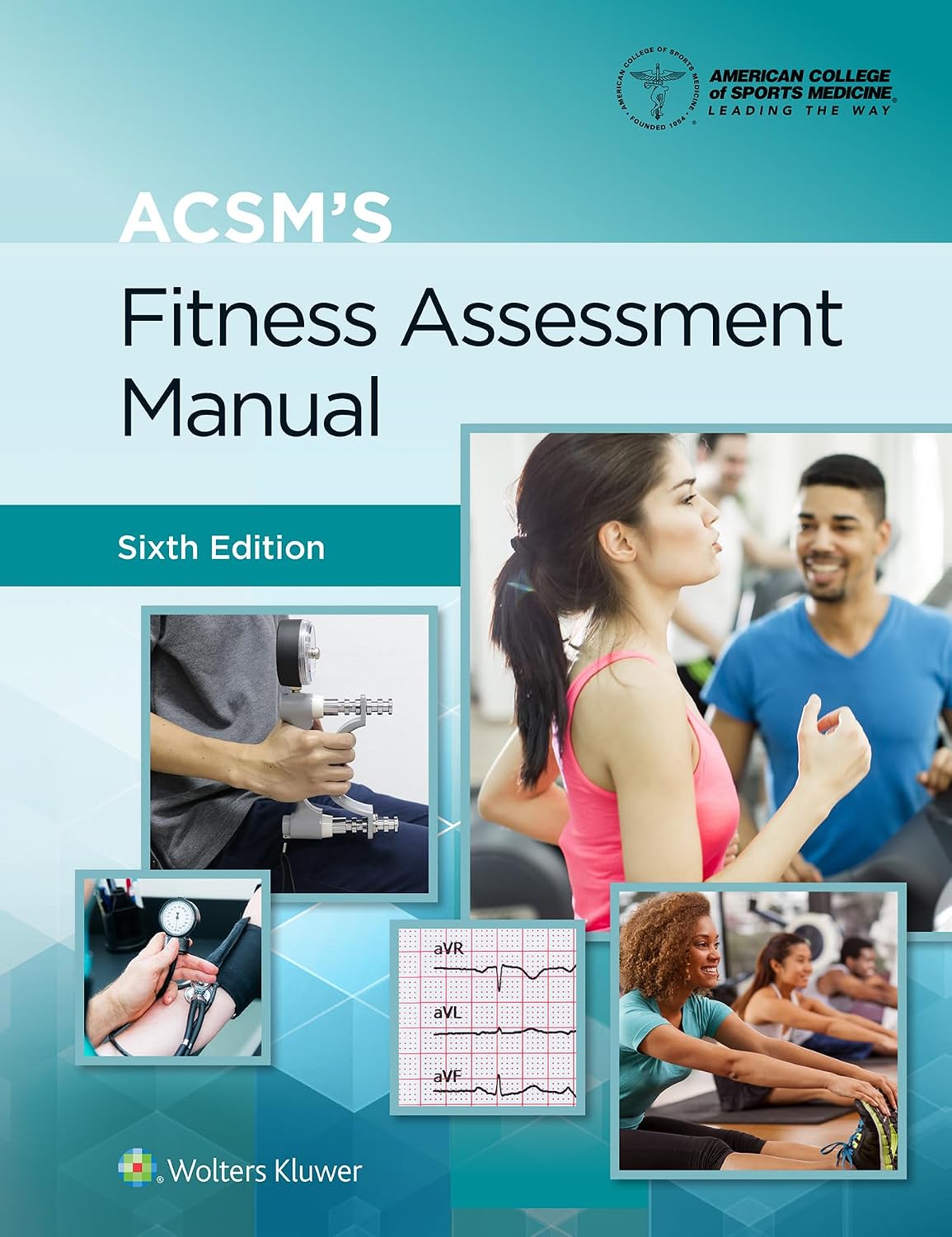
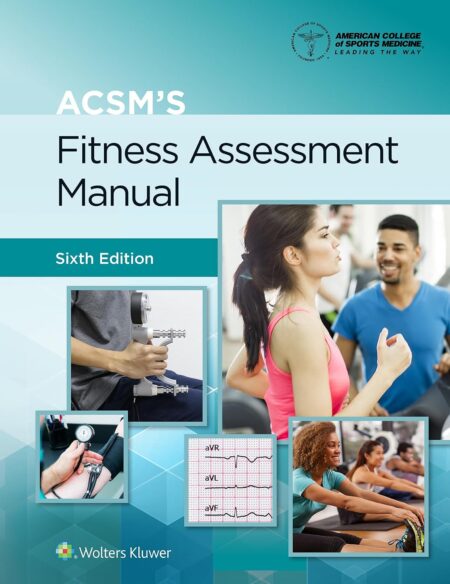
ACSM’s Fitness Assessment Manual, 6th edition
Anyone can put a client on a treadmill. Doing it to a standard that holds up professionally, correct protocol, correct measurement, correct interpretation, is what this manual teaches. Published by the American College of Sports Medicine and edited by Yuri Feito, PhD, and Meir Magal, PhD, it is the assessment companion to ACSM’s flagship guidelines.
The book is organised both by component of fitness and by type of testing, so it works whether you are looking up a client’s needs or a protocol’s requirements.
What the manual covers
- Body composition: measurement methods, their accuracy and their limitations.
- Cardiorespiratory fitness: field tests through to laboratory protocols.
- Muscular fitness: strength and endurance assessment.
- Flexibility: range of motion testing.
- Maximal and submaximal exercise testing, including protocol selection and termination criteria.
- ECG and metabolic calculations.
Why it matters in practice
- Aligned to ACSM standards, the reference point employers, certifying bodies and clinical partners expect.
- Written for the bench rather than the shelf: a format meant to be consulted during testing.
- Suits students entering the field and practitioners bringing existing practice up to current standards.
Who this manual is for
- Exercise science, kinesiology and sports medicine students.
- Candidates for ACSM certification.
- Personal trainers, exercise physiologists and clinical exercise professionals.
- Cardiac and pulmonary rehabilitation staff.
Book details
- Title: ACSM’s Fitness Assessment Manual
- Author: American College of Sports Medicine, edited by Yuri Feito and Meir Magal
- Edition: 6th
- Publisher: LWW (Wolters Kluwer)
- ISBN-13: 9781975164454
- Format: Paperback, 208 pages
Questions buyers ask
Who is this manual written for?
Exercise science and kinesiology students, candidates for ACSM certification, personal trainers, exercise physiologists and cardiac or pulmonary rehabilitation staff.
How is the ACSM fitness assessment manual organised?
By component of fitness (body composition, cardiorespiratory fitness, muscular fitness and flexibility) and by type of testing, so it works as a lookup either way.
Does it cover ECG and metabolic calculations?
Yes. Maximal and submaximal exercise testing, ECG interpretation and metabolic calculations are covered alongside the fitness component chapters.
Is this tied to ACSM certification standards?
Yes. It is aligned to ACSM standards, the reference point employers, certifying bodies and clinical partners expect.
Is this the paperback edition?
Yes. ISBN 9781975164454 is the LWW (Wolters Kluwer) paperback, 208 pages.





Reviews
There are no reviews yet.