



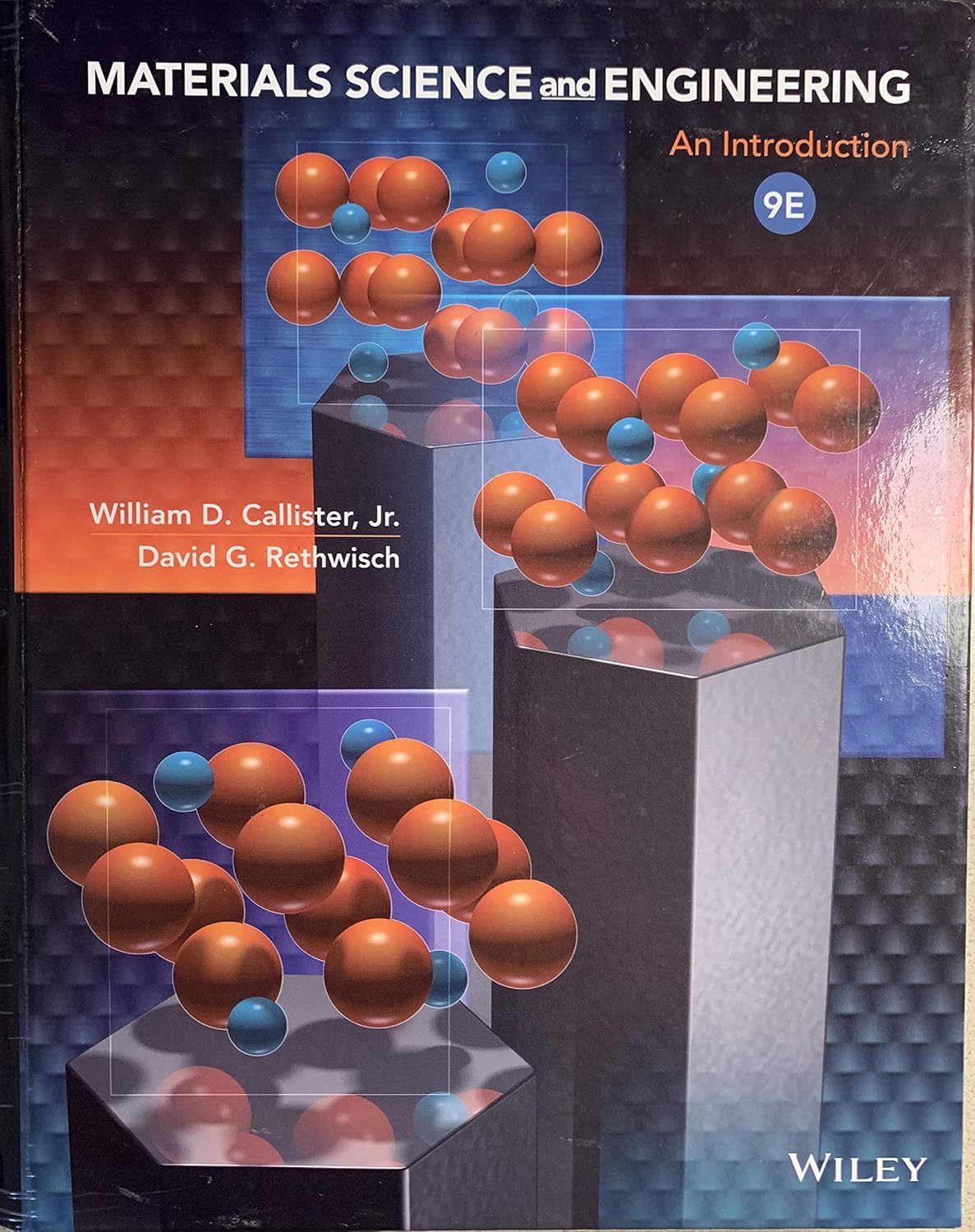
Description
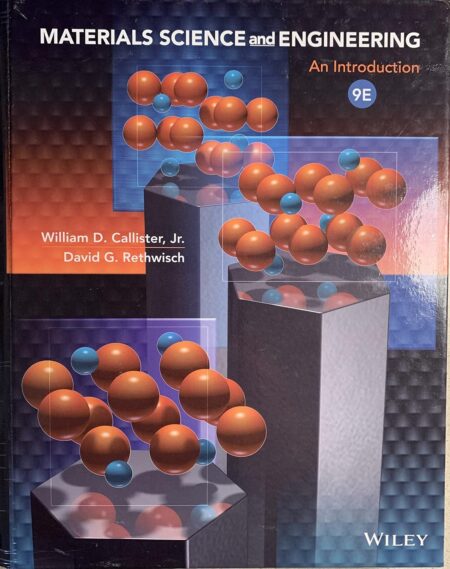
Materials Science and Engineering: An Introduction, 9th Edition
For most engineering undergraduates, this materials science and engineering text is the first materials textbook they open, and often the one that stays on the shelf afterward. William D. Callister Jr. and David G. Rethwisch continue the structure property processing performance approach that made earlier editions standard reading in mechanical, civil, aerospace, chemical and materials engineering programmes worldwide.
The argument runs throughout: understand what a material looks like at the atomic and microstructural level, and its behaviour under load, heat and corrosive attack stops being a set of numbers to memorise and becomes something you can reason about.
What the book covers
- Atomic structure and bonding, the starting point for why metals, ceramics and polymers behave so differently.
- Crystal structures, crystallographic planes and directions, and the imperfections and dislocations that govern real material behaviour.
- Diffusion and phase transformations, including the phase diagrams engineers read daily.
- Mechanical properties: elastic and plastic deformation, strengthening mechanisms, failure, fatigue and creep.
- The three primary material classes plus composites, each treated in its own right rather than as a footnote to metals.
- Corrosion and degradation, and electrical, thermal, magnetic and optical properties.
- Materials selection and design, with economic and environmental considerations.
Learning support in the ninth edition
Virtual Materials Science and Engineering (VMSE) is a redesigned set of interactive simulations and animations for concepts that are hard to picture on the page, such as crystal structures, crystallographic planes and directions, and dislocation motion. The book also includes a materials property database for design problems, plus worked example problems, concept checks and end-of-chapter design questions throughout. WileyPLUS online access is sold separately and is not included with this book.
Who this textbook is for
- Undergraduate engineering students taking a first course in materials science.
- Mechanical, civil, aerospace, chemical and manufacturing engineering majors needing a materials reference.
- Practising engineers refreshing on phase diagrams, failure mechanisms or materials selection.
- FE and PE exam candidates covering the materials portion of the syllabus.
Book details
- Title: Materials Science and Engineering: An Introduction
- Authors: William D. Callister Jr. and David G. Rethwisch
- Edition: 9th Edition
- Publisher: Wiley
- ISBN-13: 9781118324578
- Format: Hardcover, 992 pages
Questions buyers ask
Who is this materials science and engineering book for?
Undergraduate engineering students in a first materials course, plus mechanical, civil, aerospace, chemical and manufacturing majors who need a reference. Practising engineers and FE or PE exam candidates use it too.
Does WileyPLUS access come with the book?
No. WileyPLUS online access is sold separately and is not included with this book.
What is VMSE?
Virtual Materials Science and Engineering is a set of interactive simulations and animations, redesigned for the ninth edition, that cover crystal structures, crystallographic planes and directions, and dislocation motion.
Does it cover all classes of materials or just metals?
All three primary classes, metals, ceramics and polymers, plus composites, each treated in its own right rather than as a footnote to metals.
What format does it ship in?
Hardcover, 992 pages, published by Wiley.





Reviews
There are no reviews yet.