



Description
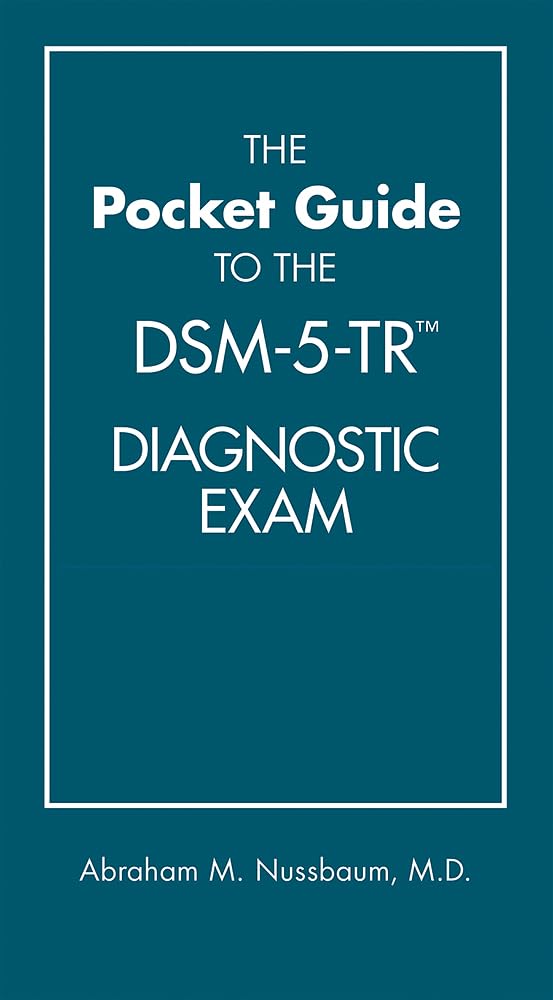
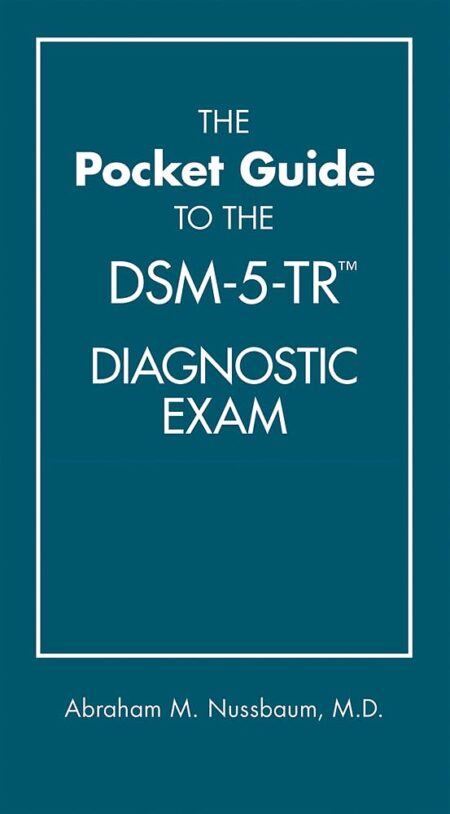
The Pocket Guide to the DSM-5-TR Diagnostic Exam
The Pocket Guide to the DSM-5-TR Diagnostic Exam, by Abraham M. Nussbaum, MD, MTS, is a practical manual for turning DSM-5-TR criteria into a natural, therapeutic conversation. It is built for clinicians at every experience level who need to bridge the gap between the manual’s requirements and the needs of the patient in front of them.
The guide centers on the 30-minute diagnostic interview, giving clinicians a structured but flexible roadmap for assessment. A six-question differential diagnosis framework helps rule out medical, substance-induced and developmental causes of distress.
A roadmap for the 30-minute interview
Rather than listing criteria in isolation, the guide walks through a full interview, with interview scripts and follow-up questions for every major diagnostic category, so a clinician can move through an assessment without losing the thread of the conversation.
Updated for DSM-5-TR
This edition has been updated to reflect DSM-5-TR changes, including the addition of Prolonged Grief Disorder and revised text for over 70 disorders. It also includes a “Brief Version of DSM-5-TR” and a detailed Mental Status Examination.
What is new in this edition
- A clear, time-efficient template for the 30-minute diagnostic interview.
- Criteria for new diagnoses such as Prolonged Grief Disorder and updated symptom codes.
- A six-step differential diagnosis method to narrow down potential diagnoses.
- Interview scripts, follow-up questions and a “Brief DSM-5-TR” reference section.
Book details
- Title: The Pocket Guide to the DSM-5-TR Diagnostic Exam
- Author: Abraham M. Nussbaum, MD, MTS
- ISBN-13: 9781615373574
Questions buyers ask
What does the 30-minute interview structure look like?
It is a time-efficient template that walks a clinician through a full diagnostic assessment in about half an hour, with scripts and follow-up questions for each major category.
Does it include Prolonged Grief Disorder?
Yes, along with revised text for over 70 other disorders, reflecting the DSM-5-TR update.
What is the six-step differential diagnosis method?
A structured framework that helps a clinician rule out medical, substance-induced and developmental causes of a patient’s distress before settling on a diagnosis.
Is this meant for beginners or experienced clinicians?
Both. It is written to help clinicians at every experience level connect DSM-5-TR criteria to a natural, therapeutic conversation.
What is the ISBN for this title?
9781615373574.






Reviews
There are no reviews yet.